
My journey.
God is in the world reconciling us back to himself, back to each other, back to creation, and back to our true selves.
2008
2011
2015
2018
(This is an excerpt from the end of my book, Christ over Culture)
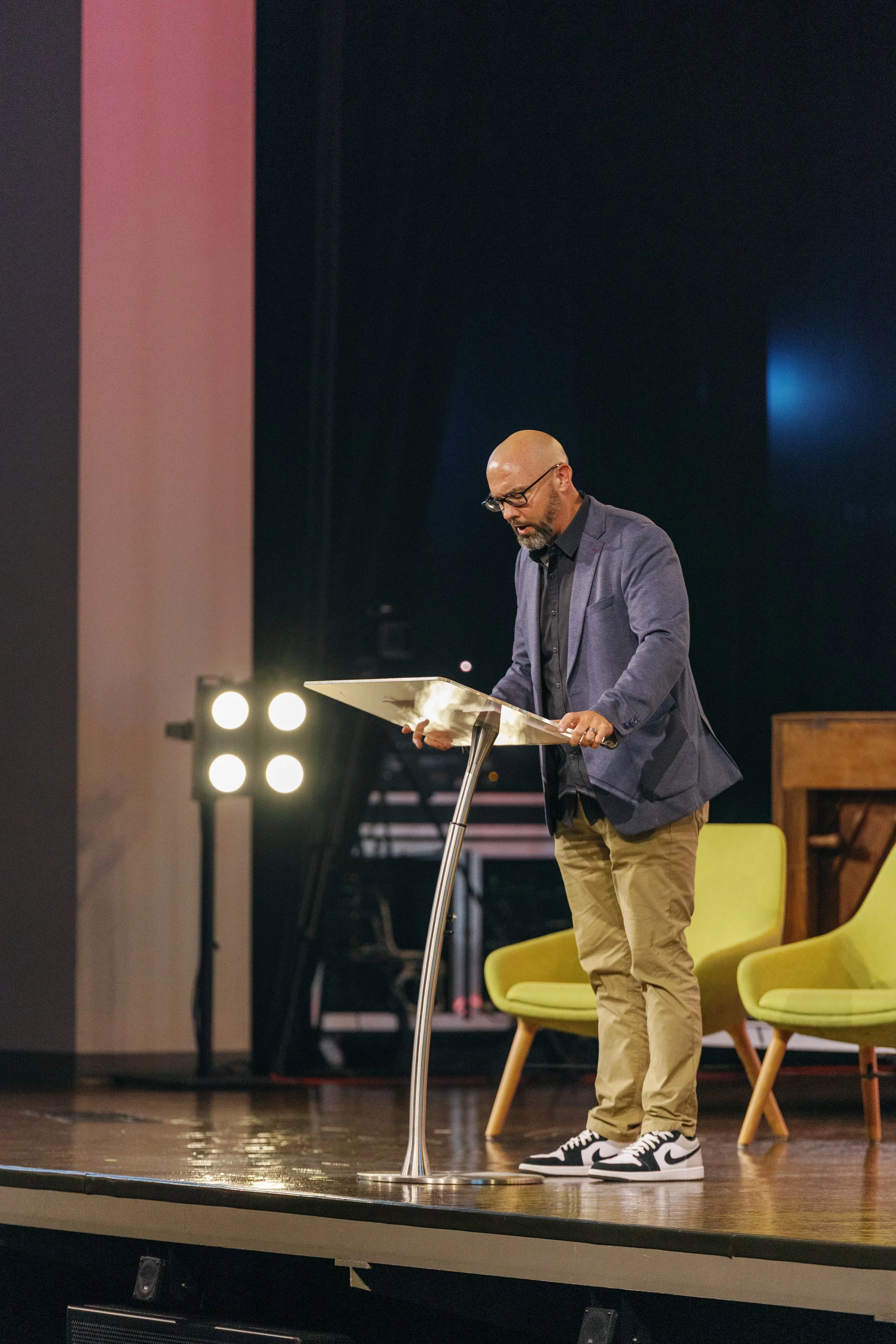
Hello! My name is Dan Crain and I live in Atlanta, GA with my amazing wife and four incredible kids. I work for the OneRace Movement as the Director of Formation and Mobilization. My passion and calling in life is to see the body of Christ become unified around the gospel. I began this journey in 2006 in Grand Rapids, MI while in Seminary and attending a large church that was white that began to study the Bible’s implications on race and justice in the world.
A God who wastes nothing…..
We have a God who wastes nothing and has been writing a story with our lives. Often, I step back and wonder how a white farm boy from Bumpville, Pennsylvania, ended up living in Atlanta, Georgia, doing the work of reconciliation in the white church.
I struggled all through grade school. I failed classes. I flunked tests. I got kicked off sports teams because my grades were too bad. I graduated with a 1.8 GPA (not kidding), got accepted into college on academic suspension, and now I just wrote a book that became an Amazon best seller!
When my parents named me, they chose Daniel Mark. The more I’ve pressed into the meaning of my name, the more I see the story that the Father has written on my life. The prophet Daniel called Israel to repentance for the sins they had committed against God. Daniel was able to live a godly life in the midst of the pressures of Babylon because of his deep dependence and trust upon the Father. His name in Hebrew literally means “God is my judge.”
The gospel of Mark portrays Jesus Christ as a servant. In my years as a peacemaker in the church and my healing from past family-of-origin wounds, I’ve sensed the Father’s voice that I can’t be a servant of others until I’ve embraced that God is my judge.
Peacemaking is hard. I’ve been attacked and judged from both sides of the trauma. But peacemaking is what I’m called to, as I’ve always been drawn to those who are mistreated by bullies, even going back to middle school years. During my sixth-grade year in elementary school, I did a project on the history of the part of the Underground Railroad that ran up the Susquehanna River through Athens, Pennsylvania, just fifteen minutes from Bumpville.
I had forgotten about this until after Mom passed away and I was cleaning out the old farmhouse where I grew up. Because Karen Joy Crain (my late mother) never threw anything out, I had an old shoebox of memories, and that was where I saw this:
Why I picked this subject to report on, I do not know, but the Father does. I think it was because of what the Father was doing in my life early on and the diverse relationships I had in high school and college. He was preparing me for what I would hear from Pastor Marvin Williams that cold Sunday morning in Grand Rapids, Michigan.
When I heard about the history of the Black community and what my people had done, my heart broke that I didn’t know any of the history and I felt like I needed to do something. I relate a lot to Atticus Finch in To Kill a Mockingbird. I hate it when there’s a bully picking on people, and I feel a huge need to stand up for justice.
After that moment with Pastor Marvin, I changed my degree in seminary to a Masters of Intercultural Ministries because my wife and I knew God was calling us into this work. An African American pastor and adjunct professor at the seminary, Dr. Reggie Smith, mentored me in this work as he was pastoring a church in inner-city Grand Rapids.
Dr. Reggie pointed me to many resources about reconciliation in the church. I wrote a research paper on how Christ broke down the dividing wall of hostility between the Jews and the Gentiles from Ephesians 2, and as I did, I fell deeply in love with a God who longs to reconcile all things in His Son, Jesus Christ.
In 2008, we spent a month living in an African American community in Atlanta, interning with a nonprofit that was doing community development. My wife and I fell in love with the neighborhood, the deep history dating back to Reconstruction, the impact of the 1906 Atlanta Race Massacre, and the people living there doing the hard work of justice for their community.
When the month ended, we were invited to move back into that community, but at the time we weren’t ready to raise funds and move into a neighborhood experiencing distress. I also felt we had more to learn. I wrestled with whether or not God was calling us to this work, and in August 2008, I asked God for a dream. I went to bed and woke up the next morning having had a clear dream. In the dream I was sitting on a set of bleachers with four young black men. The key piece is that I was sitting. I knew the Spirit was up to something.
At that moment we weren’t ready to move to Atlanta, so we returned to Orlando. There we were exposed to Polis Institute’s Serving with Dignity and the need to live out a dignified interdependent relationship with those who are different from us.
Through this training, Christ made it very clear that as a white man coming from majority culture, I was to be a learner more than a teacher, particularly in the work of racial reconciliation. I was so deeply impacted by the Serving with Dignity training that I began to raise funds under Polis. We moved to Atlanta in May 2011, to live in an underserved community that had been affected by racism, work at a small church in the neighborhood under leaders of color, and connect with and share with churches the message of Serving with Dignity. It was that training that opened a lot of doors for me to talk about race within majority white churches.
One of the lessons from the training pushes deeply into racial and cultural differences and how the gospel breaks down these barriers. It was also the experience of sharing life with young Black men in the neighborhood that deeply shaped the way I saw how little culture cared for their lives. They were constantly harassed, profiled, and accused simply for the color of their skin. These stories changed me profoundly.
In 2015, I burned out from the ministry. I realized it was a result of a lot of unhealed wounds in my soul, wounds Christ was inviting me to look into with Him. I was living a divided life and wasn’t facing the deep hurts of my past. Jesus invited me to reconcile the divided life inside of me. I believe this is why the church is divided, we’ve never gone fully backwards to face the trauma in order to heal to move into the fullness of Revelation 7:9.
That was when I really began to learn from and be impacted by the theology of the Civil Rights leaders. As a result of this healing, I developed a discipleship training called Loving Freely. Loving Freely is based on the reality that in order for us to be honest about reconciliation, we must allow this to happen in ourselves first and be honest about the ways in which culture has shaped us. The same is true about racial reconciliation. We must dive deep into the pain of the past and its implications in today’s world to really heal.
In 2018, a group of men journeyed into the racial history of our country and its impact on us using Latasha Morrison’s curriculum at Be the Bridge. This training took the reality of the problem of race in our country and church from an intellectual level into my heart and soul. My journey with these men peaked when we visited Bryan Stevenson’s work with the Equal Justice Initiative at The National Memorial for Peace and Justice in Montgomery, Alabama, to honor the over 4,400 men and women lynched in our country because of white supremacy.
I got connected to the OneRace Movement in late 2017 when I met with Josh Clemons. He shared the vision of what the OneRace Movement was trying to call churches to, and from that very moment, I was all in. I had the honor of co-leading a Reconciler Group of pastors and leaders in the Southeast part of the city with Pastor Arthur Breland of United Church. At our first meeting, around forty pastors and leaders showed up to hear about the OneRace Stone Mountain event.
In 2019, Pastor Arthur put together a march to commemorate the street name change from Confederate Avenue to United Avenue, and we walked together with over three hundred fellow believers in an amazing spirit of unity. The Holy Spirit’s presence among us was palpable. I joined the OneRace Movement in January 2020 to serve as the Director of Formation and Mobilization, as my heart and passion has always been to do this work on the street level. Conferences and marches are beautiful and good, but if we’re not pursuing the new humanity in the norm of life, the structures will still be there and never change. My joining OneRace at the beginning of 2020 was a strategic move by the Father, as it was in 2020 that many in the white church had their eyes opened to the reality of the deep-seated racism existing beneath the surface of our culture.
ONGOING WORK WITHOUT AND WITHIN
Part of my job with the OneRace Movement is to write content around the transformational model of Know the Story, Own the Story, and Change the Story. The massive amount of interest in God’s heart for reconciliation during the racial unrest in 2020 was great, so we started to write content to disciple the church. We based all of our content on the Scriptures and wrote the first three levels, Reconciliation 101, 201, and 301 in 2020.
When it came to Reconciliation 401, we wanted something about how culture had shaped us. At the same time, I had been reading through Galatians on my own with the Heavenly Father, and I kept being drawn back to Galatians 2, where Paul opposed Peter to his face because Peter refused to eat with Gentiles in Antioch. It was amazing how much Peter’s culture had shaped him, leading him to sin. I then connected the dots to my own journey about how a culture of whiteness had shaped me, leading me to sin against my brothers and sisters of color. I then realized that my journey into this work has been deeply shaped by People of Color who have lovingly confronted me in my cultural blind spots.
Then on May 14, 2022, everything about how culture connects me on a whole different level became a reality, when my distant relative—because of his white supremacist ideology—drove to Buffalo, New York, and murdered ten Black people.
In the days following that incident, I struggled to get my bearings because of God’s call for His people to be unified. I had been giving my life to doing the exact opposite of what my second cousin had just done.
My culture did this. Our culture did this. A culture of comfort and a lack of compassion from the white church allowed this to happen. It’s always been my heart to equip people to read the Scriptures through the lens of racial reconciliation, pray deeply about the demonic forces of racism in our city, read books written by leaders of color that dive deep into the history of our country and church, and make small Spirit-led, intentionally organic steps toward being the church God intends us to be.
I’ve learned to depend upon the Father’s guidance and protection in greater ways as I’ve done this work and written this book. Numerous times, I’ve felt the weight of the enemy against me not wanting to uncover what’s been hidden for so long. I’ve prayed my mom’s favorite verse more times than I can remember; Psalm 91:1–4: Whoever dwells in the shelter of the Most High will rest in the shadow of the Almighty. I will say of the Lord, “He is my refuge and my fortress, my God, in whom I trust.” Surely he will save you from the fowler’s snare and from the deadly pestilence. He will cover you with his feathers, and under his wings you will find refuge; his faithfulness will be your shield and rampart. I’ve sensed the Father’s protection as I’ve hidden under the shelter of His wings. He shields me from the arrows of the enemy as I’ve spent hours typing away.
I’ve come to appreciate Hebrews 12:1: “Therefore, since we are surrounded by such a great cloud of witnesses, let us throw off everything that hinders and the sin that so easily entangles.” I lost both of my parents in a span of six years, and neither will be alive to see this book come to fruition. I miss them greatly. I so badly wish they were alive so they could see what their son Daniel Mark has written.
But the good news is that Mom and Dad both love Jesus, and I believe they are in the great cloud of witnesses cheering me on in this reconciliation work. My mom, in particular, was my biggest fan and had a real heart for reconciliation. She would come and spend time in our community getting to know the young men from the neighborhood. We would have long conversations about race and the church, and she was eager to learn.
I think my deepest lament is toward the white church and the reality that they are missing out on what God is doing in the world as He takes us to Revelation 7:9. I am so much better because of how People of Color have lovingly confronted me. I am better because Victor said to me, “Dan, I don’t think you understand the depth of the issue of race in our country.” I am better because Pastor Arthur lovingly said, “Dan, your whiteness is kicking in.” I am better because Peter Lim has invited me into his life and church to learn about the Asian American experience. I am better because my friend Luz patiently and graciously helps me to learn Spanish. I am better when my friends who live in the streets have prayed over me or offered me counsel when my mom was dying.
When my time comes, I want my funeral full of the diverse body of Christ. I want it to resemble Revelation 7:9, with every culture, tongue, and language. Why? Because people I’ve invested in and who know I value them will come to my funeral. It is my hope and prayer that People of Color have felt this from me.
May the Holy Spirit call us all out of how culture has shaped us into the beautiful culture of God’s kingdom, where every culture, tribe, people, and language are together worshiping Jesus.